MOLECULAR EGG
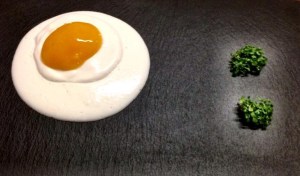
I love my cooking and so if I can take it to the next level, I will. The molecular egg is part cooking/part science and the best thing about it is that it is not that hard. It only took me half an hour to make two of these. This dish is a dessert and really plays on your mind when you eat it. You think it should taste like egg as it has the same texture but once the flavors hit you know it most definitely isn’t!
INGREDIENTS
– 5g Sodium Alginate (*Specialist Ingredient)
– 1000g Distilled Water
– 1/2 Cup Milk
– 2g Agar-Agar (*Specialist Ingredient)
– 2/3 Cup Vanilla Yoghurt (Although I used CoYo yoghurt)
– 1 1/4 Cups of Mango
– 2 Tbsp Castor Sugar
– 1/2 Tsp Calcium Lactate or Calcium Chloride (*Specialist Ingredient)
METHOD
First step is to make the sodium alginate bath. Grab a large container preferably with a flat bottom and pour in the distilled water. You then want to add the sodium alginate and combine by using a hand blender. cover the container and set aside in the fridge for 15 minutes or until all the bubbles in the solution have disappeared.
For the second step pour the milk in a small saucepan and heat until boiling. Once boiling you need to add the agar-agar, hand blitz and add this to the yoghurt in a measuring jug stirring well. You will need to have a plate at the ready as this mixture goes off quick (there is a video for the making of this, the link is below). Pour one large circle out wait for 5 seconds and then pour another smaller circle on top. Place in the fridge to set.
For the mango yolk, you need to add the mango, castor sugar and calcium lactate or chloride into a blender and blitz into a fine purée. Pour into a container and set aside the sodium alginate solution on a clear bench. You will also need another container with just plain water in it. Once you have this all done, scoop the mango purée with a soup spoon and pour it into the sodium alginate solution. Let this sit in the solution for 3 minutes and then stir slowly. Remove the spheres with a slotted spoon and drop into the water to rinse stirring them around.
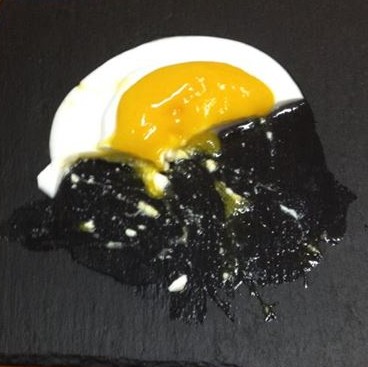
With all this done take out the egg whites and with the back of a spoon and where you think the yolk will go, lightly press to form a divot. Lastly with a spoon, pick up one of the spheres and place in the divot and voilà, you have a dessert egg.
Recipe was made using the video of “youtube” by Julie Grealy
Molecular Egg “https://www.youtube.com/watch?v=NZPD5VsdDGE“
The specialty ingredients can be bought online in the form of a kit or separately from the websites below or from any Compound Chemists in your local area.
http://www.redspooncompany.com/index.php/ingredients/modernist-cuisine.html
http://www.molecularfoods.com.au/buy/
Agar-Agar can be bought at most supermarkets or oriental delis.

 Home Cooked Heston