The Hanger Steak


HANGER STEAK

IMG_6493

Little is known about this much sort after steak and I feel it is my job to let people know just what it is! Hanger Steak is located in the “Plate Cut” of the cow (Diagram Below)  and is most prized for its flavour. In the past, it was commonly known as the “Butcher’s Steak” because butchers would often keep it for themselves rather than offer this steak for sale. Although this steak isn’t quite as tender as other cuts, it certainly makes up for it in robust flavours. Below is a recipe that I have used, its just a simple one to have my first Hanger Steak as you don’t really want to over do it. Lastly, there is a little place in Welshpool called Swansea Markets and this is where I found this magnificent steak.

IMG_6485

IMG_6488

Diagram-of-Beef-Animal-Showing-Principal-Cuts

– 1 Shank or leg – 2 Shoulder – 3 Brisket – 4 Knee Bone – 5 Neck – 6 Short Ribs – 7 Chuck Ribs – 8 Prime Ribs  9 Navel – 10 Plate – 11 Flank – 12 Loin – 13 Rump – 14 Round – 15 Horse Shoe Piece – 16 Soup Bone – 17 Tail

INGREDIENTS

– Hanger Steak

– Wholegrain Mustard

– 2 Cloves of Garlic

– 2 Sprigs of Rosemary (Roughly Chopped)

– Pinch of salt

– Pinch of Cayenne Pepper

METHOD

Place all ingredients into a large bowl and mix well to combine. Place the meat in the bowl and rub in and coat well, cover with glad wrap and place in the fridge to marinate. Set the SouvVide temperature to your liking from 55° for medium-rare to 70° for well done (Breville Chart). Once the meat is ready, seal it off on all sides on an extremely hot pan, put into a vac-pack bag, seal and place then into the SousVide to cook (Time depends on your liking and meat thickness just click on the Breville Chart link above). When the timer goes off and the meat is done quickly seal it again, caramelising all those beef juices, then carve and serve.

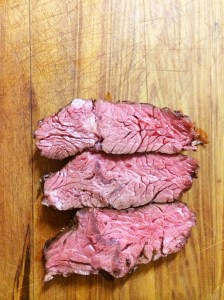
There is also a lovely app by Poly-Science called SousVide Toolbox. All you need to do is enter your details and the app gives you a specific time and chart. In my case it took 2:35:40 at 58° (which is just under medium). Results are in the first photo above and as you can see it is cooked through perfectly and evenly.

Adapted from Anne Burrell from the Food Network

Meat Cut Link: http://chestofbooks.com/food/recipes/A-Book-Of-Recipes-For-The-Cooking-School/Beef.html#.Ux1879whM3Y

Marinade Link: http://www.foodnetwork.com/recipes/anne-burrell/marinated-grilled-hanger-steak-recipe.html
62° Egg


62° EGG

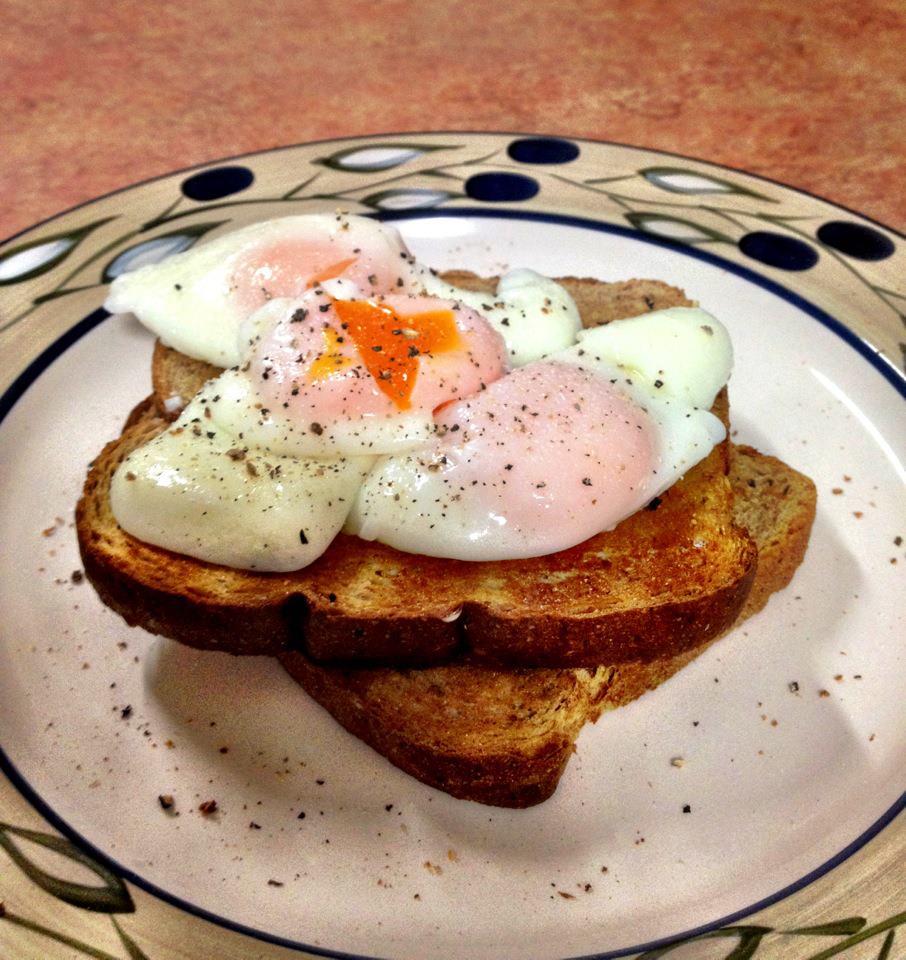
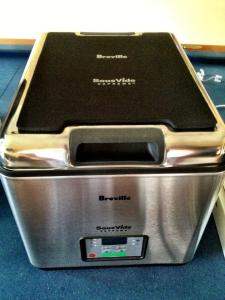
62° Egg is one of my most favourite recipes to cook in the SousVide (pronounced Soo-Vee). The SousVide is the best present I have ever received, and it is one of the most used appliances I own. This recipe is a simple one, and I know what your thinking “I don’t have a SousVide” BUT, there are two other ways you can make these eggs and achieve that same velvet like result and I will share this with you in the method part for you to follow and make these magnificent eggs.

62 egg 2

62 egg 1

62 egg 3

INGREDIENTS

– Eggs (Quantity up to you but the fresher the better)

– Water

– SousVide (If you have one)

– Thermometer (If you have one, Im lucky enough to have Heston’s Salter one)

– Small-Medium Saucepan

– Plate that will fit in the Saucepan

– Slotted Spoon

METHOD

METHOD ONE – This is the most accurate of the three methods. Fill the SousVide with water up to the water fill mark on the inside or so that the eggs will be well covered in water. Turn on the SousVide and set the temperature to 62° and wait until it reaches temperature. Once at the correct temperature, place the eggs in with a slotted spoon and leave to sit for one hour (SousVide has a timer).

When the timer goes off, scoop out the eggs with the slotted spoon and place on a laid out tea towel. Next you want to get the back of a butter knife and gently tap the egg and crack almost all the way around the egg. With little force the egg should split open and pour out onto the towel. There is a bit of watery egg (depending on how fresh they are) you do no want this and to get rid of it, that is why you crack them onto a tea towel. Once you have down then scoop them up with the slotted spoon and serve how you desire, I like them just on plain toast.

METHOD TWO – This method is pretty accurate however it takes some adjusting because you cannot set the stove top to a specific temperature. This method is from the idol himself Mr Heston Blumenthal and there are links at the bottom to his video and recipe. First you want to fill the saucepan with water and place the plate in upside down so it sits nice on the bottom (this keeps the egg from sitting on direct heat). You then want to stick the thermometer in and heat until the temperature reaches 80° (you must keep it at this temperature).

Once this happens you want to crack the eggs onto a slotted spoon over a bowel to catch and get rid of any extra water in the egg. Roll the egg off the spoon into the water and cook for four minutes. Once four minutes are up, fish out with the slotted spoon and place on a paper towel to get rid of excess water. Scoop back up with the slotted spoon and serve however you desire.

METHOD THREE – This last method is the least accurate but through experimenting you don’t need a SousVide and you don’t need a thermometer. You simply heat the water like in method two but until the water is boiling and then turn off the heat and place the plate in first then the eggs just like above. Wait four minutes (or you may have to test the timing but four minutes comes pretty close to the ones in method two.) Scoop out with a slotted spoon drain on a paper towel and serve how you desire.

Full Credit for METHOD TWO and my adapted METHOD THREE to SBS’s food section, Heston Blumenthal’s Recipes

VIDEO: https://www.youtube.com/watch?v=Pux9JRiGRHY

RECIPE: http://www.sbs.com.au/food/recipes/heston-blumenthals-poached-eggs